Russia-Ukraine War: Escalating Drone Strikes Test Fragile Peace Talks After Trump-Zelenskyy Negotiations
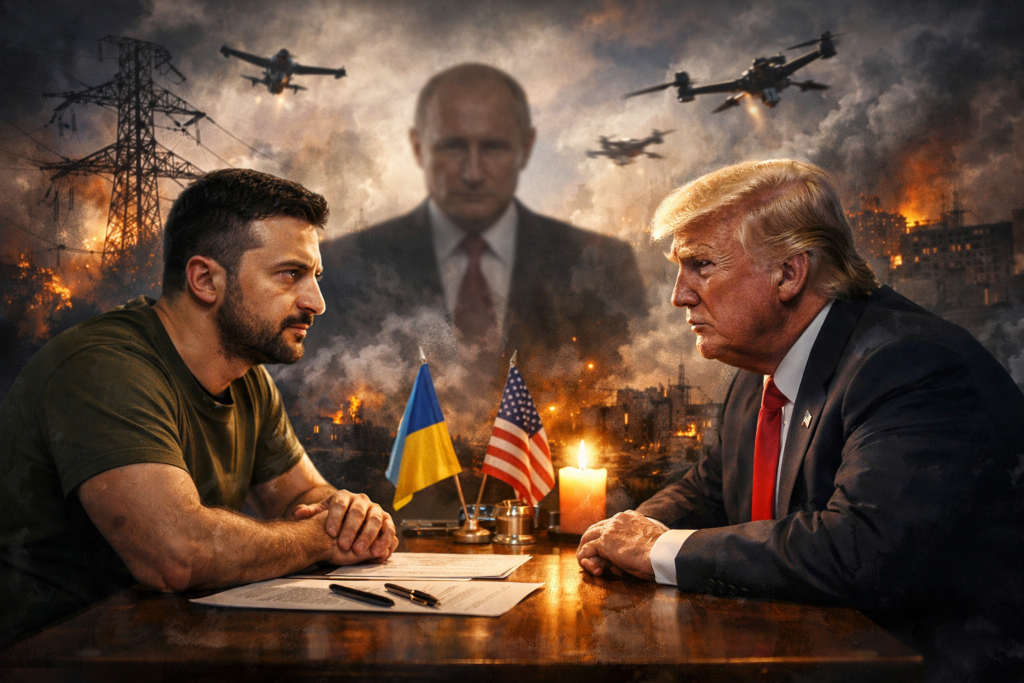
KYIV, Ukraine — As peace discussions between Ukraine, Russia and the United States continue to evolve, a surge in drone strikes and mutual accusations has raised fresh concerns about the future of diplomatic efforts to end the nearly four-year conflict.
In the early hours of New Year’s Day 2026, Ukrainian officials reported that Russian forces launched more than 200 armed drones against multiple regions across Ukraine, including Volyn, Odesa and Chernihiv, severely damaging power infrastructure and leaving over 100,000 homes without electricity. Ukrainian President Volodymyr Zelenskyy condemned the attack, stating Moscow’s assault underscored the urgent need for stronger air-defense systems and for allies to honor commitments to deliver critical equipment.
Moscow’s drone offensive came just days after high-level peace talks between Zelenskyy and U.S. President Donald Trump in Florida, where both leaders reported “significant progress” toward a diplomatic framework now described by Ukrainian officials as 90 % complete. Despite that progress, thorny disagreements over territorial control — particularly over Russia’s hold on the eastern Donbas region — continue to impede a final agreement.
In an unexpected twist, Russian authorities accused Ukraine of launching its own drone attack on a Russian-held village in the Kherson region, claiming at least 24 civilians were killed and 50 wounded during New Year celebrations. These allegations remain unverified by independent sources and have been firmly denied by Ukrainian officials, who labeled the claims as part of an effort to weaken momentum toward peace.
Zelenskyy has repeatedly insisted any peace deal must be strong, sustainable and respectful of Ukrainian sovereignty, saying he will never sign an agreement that “only prolongs war” or endangers his nation’s future. Meanwhile, Russian President Vladimir Putin has reiterated confidence in Moscow’s position, rejecting major concessions and emphasizing Russia’s continued military objectives.
The conflict’s human toll remains severe, with repeated Russian drone strikes damaging civilian infrastructure and injuring noncombatants, including children, a pattern that has drawn international condemnation and calls for accelerated support from Western allies.
As negotiators prepare for further meetings in the weeks ahead — including planned talks in Paris with European leaders about Ukraine’s security guarantees — the stability of peace efforts hangs in the balance amid continued hostilities and shifting diplomatic pressures.