Millions of Americans Close Out 2025 Facing Brutal Winter Weather and Travel Chaos
WASHINGTON, D.C. — As 2025 draws to a close, millions of Americans are dealing with record-breaking winter weather, with heavy snow, frigid temperatures and powerful storm systems stretching from the Midwest to the Northeast. This intense bout of winter conditions — including blizzard warnings, lake-effect snow and dangerously low temperatures — has disrupted travel, knocked out power for hundreds of thousands and thrown holiday travel plans into disarray.
The National Weather Service has issued winter storm and blizzard alerts for parts of Kansas, Nebraska, Michigan, New York and the Great Lakes region, where snowfall totals have already topped a foot in some areas and could reach much higher in lake-effect zones. Strong winds — in some locations gusting up to 70 mph — are reducing visibility and creating near-whiteout conditions that make road travel hazardous.
More than 67 million people remain under winter weather alerts across much of the eastern two-thirds of the country, including major metro areas like Boston, New York City and Washington, D.C. The combination of heavy snow, ice and sub-freezing temperatures has prompted officials to urge people to limit travel and prepare emergency supplies if venturing out is unavoidable.
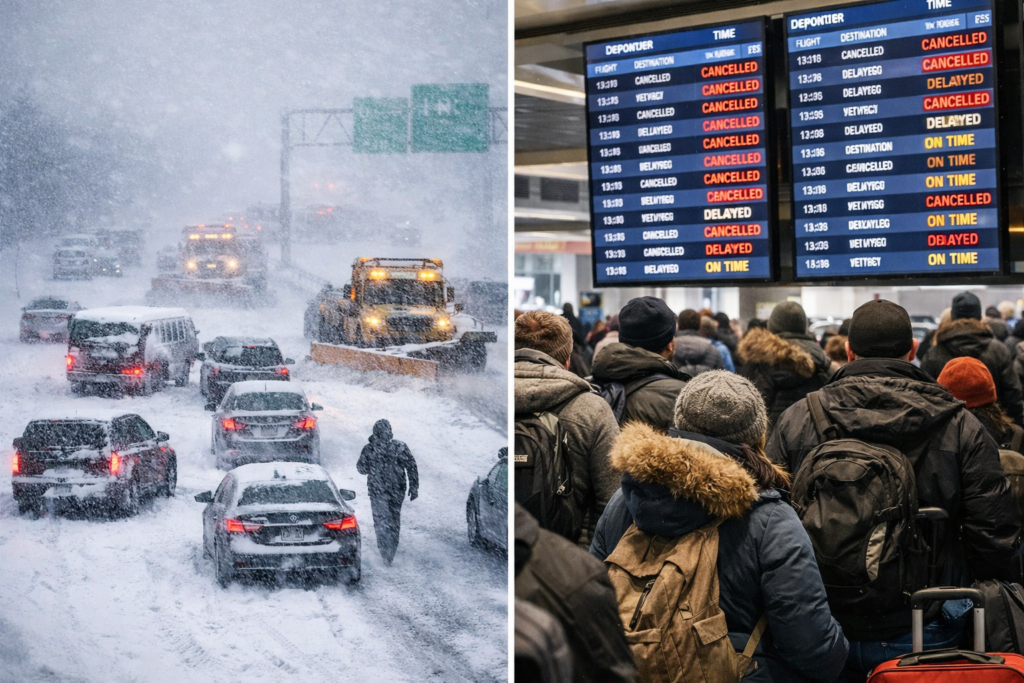
The impact on holiday and New Year’s Eve travel has been especially severe. Airlines have seen thousands of delays and cancellations, with flight tracking data showing multiple carriers reporting widespread disruptions as airports struggle to keep schedules on track amid the winter chaos. Ground travel has also deteriorated, as plows battle accumulating snow and icy roads strain transportation networks.
In some regions, residents are dealing with power outages affecting more than 120,000 homes and businesses, particularly in parts of Michigan and the Northeast where the storm has combined heavy snowfall with powerful wind gusts that have toppled trees and damaged electrical infrastructure. Authorities are warning that cleanup and restoration could stretch into the new year.
The severe weather event — driven by an unusually strong winter storm system sometimes described by meteorologists as a “bomb cyclone” due to its rapidly dropping atmospheric pressure — is a harsh reminder of how quickly conditions can shift during the winter season, especially during one of the year’s busiest travel periods.
As temperatures dip further and winter warnings remain in place, forecasters are advising communities to stay informed, keep extra supplies on hand, and take precautions to protect health and property amid this powerful end-of-year blast of winter weather.