Protests Erupt Across Iran After Rial Hits Record Low, Deepening Economic Crisis
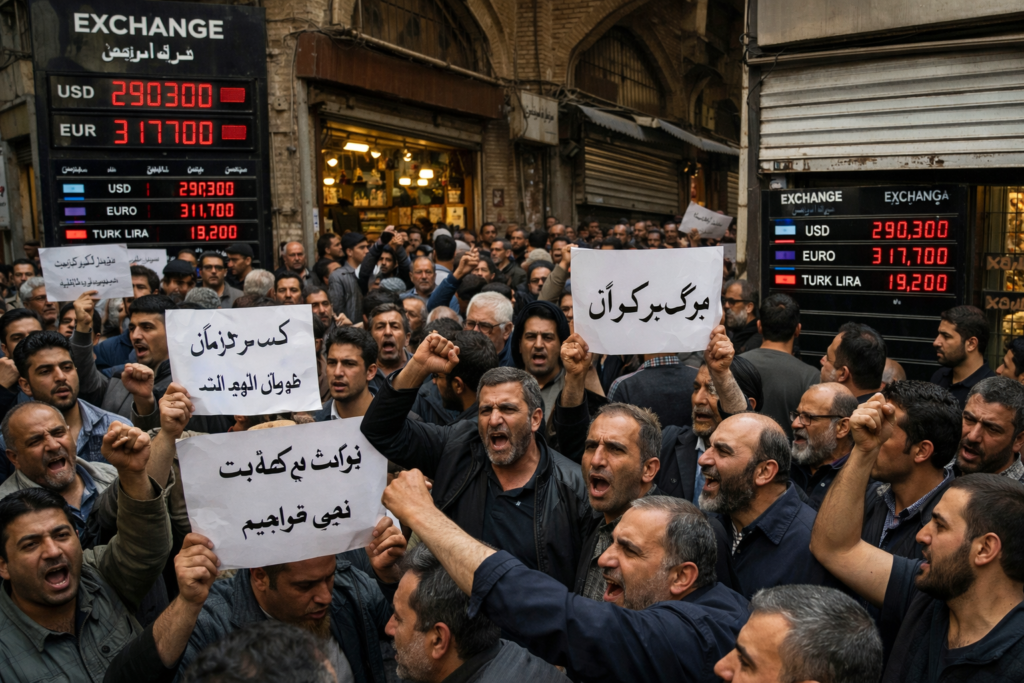
TEHRAN, Iran — Iranians took to the streets in growing numbers this week as the national currency, the rial, plummeted to an unprecedented low against the U.S. dollar, sparking widespread protests and shop closures across the country’s major cities, officials and witnesses said. The economic turmoil — now among the worst in years — has increased pressure on the government and pushed ordinary citizens to vent their frustrations over rising prices, inflation and declining living standards.
The currency’s free-market exchange rate fell to roughly 1.42 million rials per U.S. dollar on Sunday, before slightly rebounding to about 1.38 million on Monday, according to market trackers. That dramatic slide has fueled inflation that experts say already tops 42 percent year-on-year, pushing up the cost of food, healthcare and everyday essentials and squeezing household budgets.
The collapse of the rial — historically caused by a combination of long-standing Western sanctions, dwindling oil revenues and domestic economic mismanagement — has hit small business owners and traders especially hard. Videos circulating on social media showed shopkeepers in central Tehran’s Grand Bazaar, Saadi Street, and the Shush neighborhood closing their doors in protest, chanting anti-government slogans and demanding urgent economic reforms.
In response to the unrest, Iran’s central bank governor, Mohammad Reza Farzin, resigned on Monday, state media reported, with former economy minister Abdolnaser Hemmati expected to take up the post. The resignation followed days of mounting pressure as merchants and ordinary citizens struggled to cope with the currency’s sharp loss of value, which has also caused prices for basic goods such as food and medicine to surge dramatically.
While some demonstrations have remained peaceful, Tehran’s authorities have kept a watchful presence around protest sites, including the historic bazaar districts where economic grievances often translate into political discontent. Iran’s government has attempted to calm the population, with President **Masoud Pezeshkian urging officials to listen to protesters’ “legitimate demands” and pursue dialogue, though many critics say deeper structural reforms are needed.
Economists say the rial’s record low and the broad economic instability could have long-term consequences for Iran’s already fragile economy, potentially worsening unemployment and straining social services. With inflation and poverty rising, many Iranians say they fear even harsher economic conditions unless decisive and transparent policy changes are enacted soon.