Families of Bondi Beach Victims Demand Federal Action and Royal Commission Into Rising Antisemitism in Australia
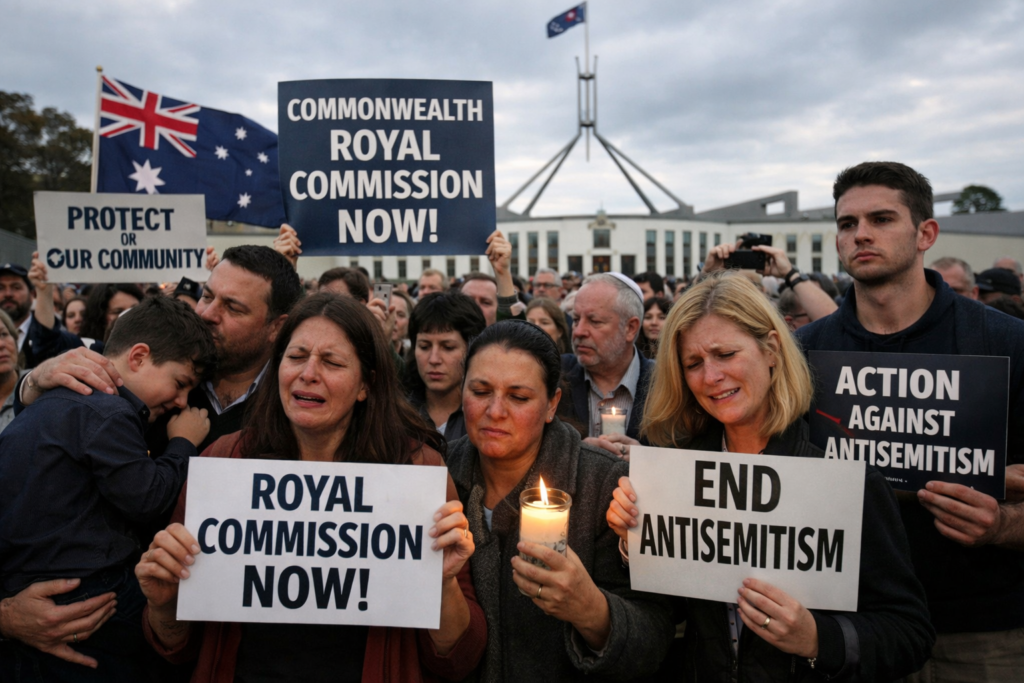
SYDNEY, Australia — Families of victims killed and wounded in the Bondi Beach terror attack on Dec. 14 have issued a powerful call for national leaders to take stronger action against antisemitism and failures in security and law enforcement that preceded the massacre. In an open letter to Prime Minister Anthony Albanese, 17 bereaved families urged him to establish a Commonwealth Royal Commission to investigate antisemitism, intelligence lapses and policy breakdowns that they say allowed the attack to occur.
The tragic shooting at a Hanukkah celebration on Bondi Beach claimed 15 lives and wounded dozens, marking one of Australia’s deadliest terror incidents in decades. The families argue that mere state-based reviews and limited inquiries are not enough to confront what they describe as a nationwide rise in antisemitic hatred and extremist threats. “We demand answers and solutions,” the letter reads, stressing that warning signs were ignored and more must be done to protect all Australians.
The open letter highlights how Jewish Australians have felt increasingly unsafe in everyday life — citing concerns for their children’s security at schools, workplaces and in public spaces since the attack and in the years following global conflicts that have spurred hate incidents. Families say that only a powerful national inquiry with sweeping authority can uncover whether law enforcement, immigration policies, or intelligence agencies missed opportunities to act before the tragedy.
So far, Prime Minister Albanese has stopped short of calling a federal royal commission. Instead, his government has pledged cooperation with a New South Wales-led royal commission, where the shooting occurred, and appointed a federal review team led by former intelligence official Dennis Richardson to examine security and policing issues. Albanese and other officials argue that a narrower, quicker federal review can deliver actionable results faster than a large-scale commission that might take years.
But the families have dismissed these proposals as insufficient. They say a Commonwealth royal commission — with the power to compel testimony from federal and state agencies — is essential to fully understand how extremist rhetoric and antisemitic violence escalated to a deadly attack at one of Australia’s most iconic public spaces. Critics of the government’s response call for transparency, accountability and systemic change to prevent future tragedies.
The debate over whether Australia needs broader national action — beyond local inquiries — reflects wider anxieties about hate crime, security policy and community safety following a period of heightened global tensions and domestic incidents tied to antisemitism. Families continue to press for decisive federal leadership as the country mourns and seeks answers.