Zohran Mamdani’s Public Safety Blueprint Raises Questions Over NYPD Role and Community Safety in New York
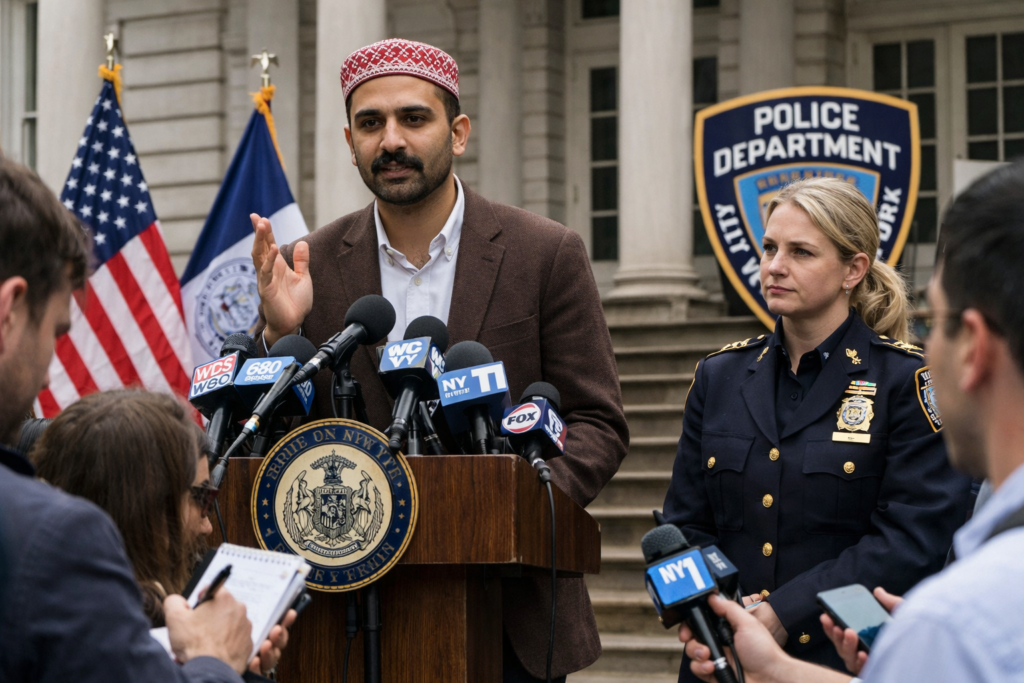
NEW YORK — New York City’s mayor-elect, Zohran Mamdani, is preparing to take office on January 1, 2026, with an ambitious public safety agenda that could reshape how the New York Police Department (NYPD) interacts with communities across the five boroughs. The Democratic Socialist, who made history as the city’s first Muslim and Indian American mayor-elect, has outlined a plan that emphasizes community-first safety measures while preserving core law-enforcement functions, marking a nuanced shift from his earlier rhetoric.
Mamdani, 34, emerged victorious in the November mayoral race with broad support from younger electors and progressive voters, defeating former New York Gov. Andrew Cuomo and highlighting issues such as affordable housing, mental health, transit equity, and public safety reform. As mayor-elect, he has received significant attention — and scrutiny — for how his policies might affect the NYPD and the city’s approach to crime prevention.
Earlier in 2025, Mamdani apologized for past criticisms of the NYPD, acknowledging the vital role police officers play in public safety while signaling his intent to collaborate more closely with law enforcement under his administration. A key part of his strategy involves retaining NYPD Commissioner Jessica Tisch, who agreed to stay on through the transition period, reassuring residents and officers concerned about continuity in leadership.
Central to Mamdani’s public safety vision is the proposed creation of a Department of Community Safety (DCS) — a new civilian agency designed to take over responsibilities often shouldered by police, such as mental health crisis response, homelessness outreach, and community support services. With a proposed $1.1 billion budget, the DCS aims to reduce unnecessary police involvement in social calls while letting officers focus on violent crime and critical emergencies.
This shift reflects a growing nationwide debate on the role of policing in urban America — particularly in large cities like New York — where service calls far exceed violent crime response demands. By redirecting non-criminal outreach to trained specialists, Mamdani says the city can improve outcomes for residents in distress and strengthen trust between communities and law enforcement.
However, critics warn that too drastic a departure from traditional policing could create confusion and uneven safety responses, especially in high-crime areas. Some police union leaders and conservative voices have raised concerns about the scope and feasibility of a civilian agency handling sensitive public safety tasks.
As New York’s new mayor prepares to move from campaign promises to governing realities, how he balances reform, safety, and collaboration with the NYPD will likely define his early tenure. The direction of these policies could influence public safety debates in other major cities grappling with modern policing challenges.