Young Men Emerge as Critical Battleground Voters Ahead of 2026 Midterm Elections
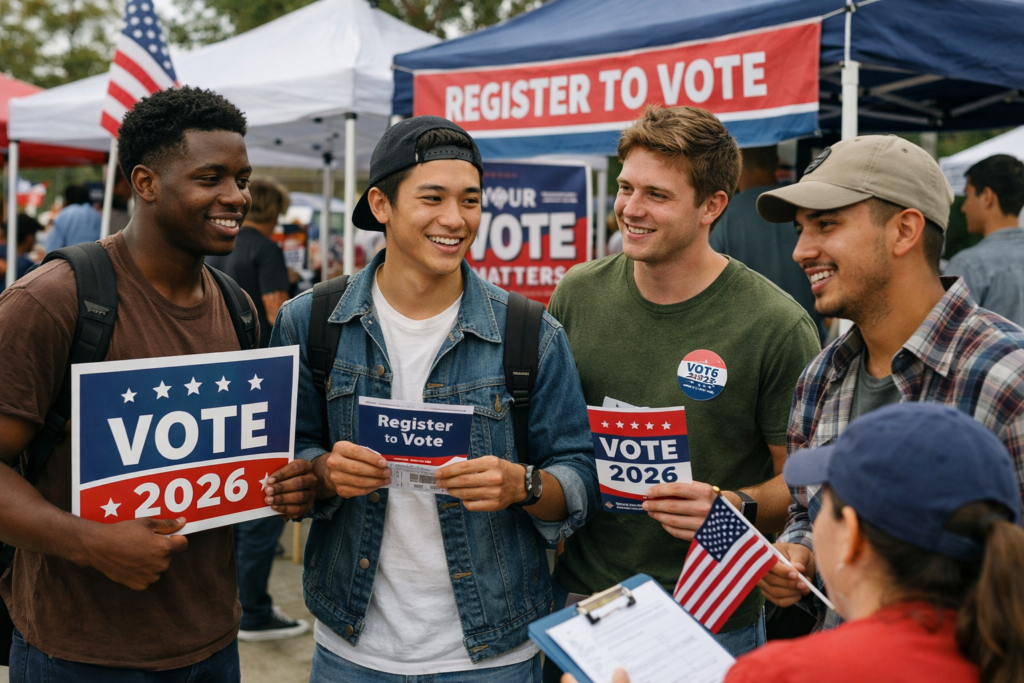
WASHINGTON, D.C. — As the 2026 midterm elections draw near, political strategists from both major parties are sharpening their focus on a demographic group that could swing key battleground states: young men ages 18 to 29. Once considered an unpredictable bloc, young male voters are attracting unprecedented attention for their evolving party preferences and potential to shape the members of the next Congress.
Recent data shows that Generation Z men are displaying shifting political loyalties, with younger male registration for Democrats declining while Republican leanings are rising in some segments. For example, Democratic registration among young white men dropped from about 49% historically to roughly 29% in more recent state-by-state figures, while young men overall increasingly express independent or fluctuating party preferences.
This gender gap — where young men lean more conservative than their female counterparts — highlights the intensified competition for youth votes. Polls and voter analysts suggest that while young women nationwide remain more consistently aligned with Democratic candidates, young men have shown increased openness to Republican messages emphasizing economic opportunity, job creation and cultural issues.
Both parties have taken notice. Democratic campaign strategists are developing new outreach programs that combine economic messaging with digital engagement, aiming to address concerns young men have raised about affordability, employment prospects and the cost of living. Some grassroots organizers have even deployed ad campaigns on platforms popular with younger demographics, such as TikTok and Reddit, to highlight job-focused policy proposals and community investment initiatives.
On the Republican side, campaign advisers are increasingly targeting this age group with messaging around personal freedom and economic vibrancy, attempting to capitalize on young men’s interest in policies that promise lower taxes, deregulation, and expanded workforce opportunities. These efforts are rooted in broader trends showing younger voters aren’t monolithic — especially on economic and cultural priorities — making the 2026 midterms especially competitive.
Voter participation rates among young adults have historically lagged behind older age groups, but turnout spikes in recent cycles suggest that when engaged, these voters can significantly influence election outcomes. Advocates for youth civic participation stress that mobilizing young men to register and show up at the polls could be a decisive factor in tight races across swing states in 2026.
As Election Day approaches, both parties are ramping up targeted ads, youth-focused town halls and issue-specific campaigns aimed at capturing this pivotal voting bloc. The young men’s vote, once seen as secondary, may prove to be a turning point in a highly contested midterm election year.