China Sanctions U.S. Defense Firms and Executives in Response to Record Taiwan Arms Sales
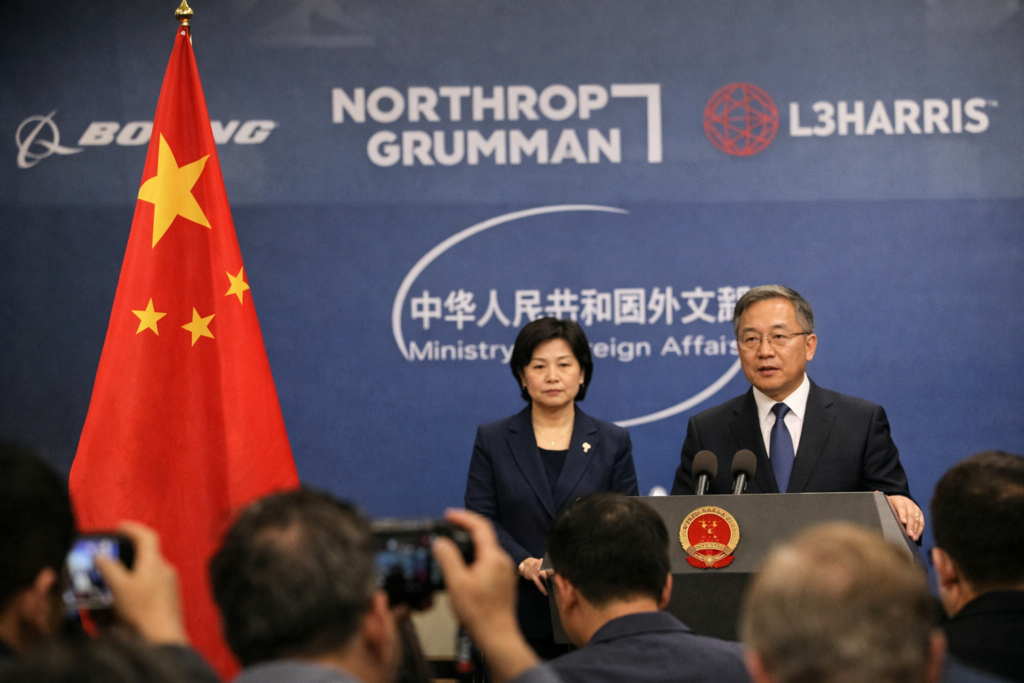
BEIJING — China on Friday announced punitive sanctions against 20 U.S. defense companies and 10 senior executives in retaliation for Washington’s recent approval of a historic arms sales package to Taiwan, a move that has sharply escalated tensions between the world’s two largest economies. Chinese officials framed the countermeasures as a necessary defense of national sovereignty and territorial integrity, reaffirming Beijing’s long-standing opposition to foreign military support for the self-governed island.
The sanctions, unveiled by the Chinese Ministry of Foreign Affairs, freeze any assets these companies and individuals hold within China and bar them from engaging in business with Chinese organizations or citizens. These measures also include entry bans for the sanctioned executives, effectively isolating them from future commercial opportunities in one of the world’s largest defense and technology markets.
Beijing’s announcement came after the U.S. State Department approved an arms package valued at more than $10 billion for Taiwan — potentially the largest weapons sale in history to the island. This defense deal, which still awaits final approval from the U.S. Congress, has drawn fierce criticism from Chinese officials who view it as a provocation that undermines peace across the Taiwan Strait.
Chinese Foreign Ministry representatives emphasized that the Taiwan question is central to China’s core interests and warned that any attempt to “cross the red line” would prompt strong counter-actions. Officials urged the U.S. to adhere to the one-China principle and honor the framework of diplomatic agreements that Beijing says prohibit formal military support for Taiwan.
Despite China’s hard-line response, analysts note that the sanctions are largely symbolic because many of the targeted U.S. defense firms have limited commercial operations in China. Still, the move sends a clear message that Beijing is prepared to escalate economic and diplomatic pressure in response to what it perceives as external interference in internal affairs.
The U.S. has long maintained military support for Taiwan under the Taiwan Relations Act, committing to help the island maintain credible self-defense capabilities. U.S. officials argue that arms sales are intended to deter aggression and promote stability, not to provoke conflict. But with both sides now doubling down on their positions, observers warn that tensions may continue to rise unless diplomatic channels are actively pursued to manage the dispute.
The sanctions mark a significant moment in China–U.S. relations, underscoring how Taiwan’s security and international partnerships remain a focal point of geopolitical friction in the Indo-Pacific region.