Russia Hits Ukraine Infrastructure Amid Miami Peace Talks With U.S., Ukraine, and Europe
MIAMI, FLORIDA — As U.S.-led peace talks on ending Russia’s war in Ukraine continued in Miami, Russian forces simultaneously carried out strikes on Ukrainian energy and infrastructure targets, highlighting the fragility of diplomatic progress and the ongoing human cost of the nearly four-year conflict. The discussions in Florida brought together representatives from the United States, Ukraine, and European partners in an effort to solidify a peace plan framework, but fighting on the ground showed no immediate sign of slowing.
Russian attacks hit power grids, energy facilities and port infrastructure across Ukraine as winter temperatures plunged, causing widespread blackouts and civilian disruption. Officials reported that at least three civilians, including a young child, were killed in the overnight onslaught, and emergency responders grappled with the impact of the strikes on essential services just days before the holidays.
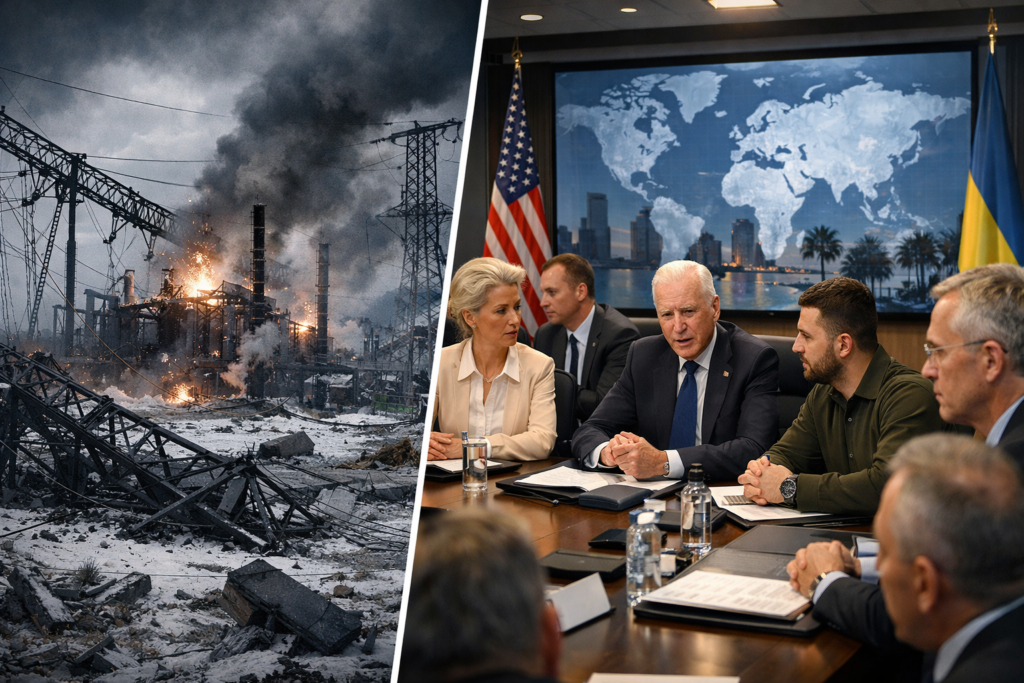
Peace Talks in Miami Continue Amid Conflict Escalation
Over the weekend of December 20–21, U.S. envoy Steve Witkoff and Trump administration representatives hosted talks in Miami with Ukrainian, European and Russian officials aimed at advancing a shared diplomatic strategy for ending the war in Ukraine. Although participants described the discussions as “constructive” and “ongoing,” Kremlin spokesman Dmitry Peskov emphasized there was no breakthrough agreement yet, and detailed negotiations would continue at technical levels.
Ukrainian President Volodymyr Zelenskyy later characterized the proposals under consideration — including elements of military, security and economic frameworks — as broadly aligned with Kyiv’s priorities, while stressing that any peace settlement would only succeed if it protected Ukraine’s territorial integrity and long-term security.
Infrastructure Under Fire Creates Winter Hardship
The Russian strikes targeted energy infrastructure that powers heating systems, electrical grids and public utilities, causing power outages that left residents exposed to freezing conditions in several regions. Damage to port operations and transportation networks also disrupted cargo and logistics, compounding economic and civilian suffering.
Ukrainian leaders condemned the timing of the attacks, saying they contradicted the spirit of diplomacy and highlighted Moscow’s continued reliance on military pressure even as negotiators met in Miami. President Zelenskyy and other officials echoed a call for stronger international support for Kyiv’s defense and reconstruction efforts.
European allies and the U.S. administration reiterated that diplomacy and military deterrence must go hand-in-hand, urging sustained support for Ukraine’s defense while pursuing a lasting peace. Some proposals discussed in Miami include a multilateral security guarantee framework, economic cooperation plans, and potential congressional review of any agreements reached.
What Comes Next: Negotiations and Continued Conflict
Despite the grim backdrop of infrastructure damage and civilian hardship, talks in Miami are part of a series of international efforts to find a path toward ending the war. Both sides are expected to continue discussions in other venues, with negotiators planning follow-up meetings to build on what has been described as initial progress toward common ground on core issues — while recognizing the significant gaps that remain.
For many Ukrainians, the clash between diplomatic negotiations and continued battlefield violence underscores the painful reality that peace remains elusive, and that the road to ending the conflict will likely require sustained engagement from Kyiv, Moscow, Washington and Europe.