U.S. Coast Guard Pursues Sanctioned Oil Tanker Near Venezuela Amid Trump Blockade of Venezuelan Oil Ships
WASHINGTON, D.C. — The U.S. Coast Guard is in active pursuit of a sanctioned oil tanker near Venezuela in international waters, U.S. officials told Reuters and CNN affiliates, as the Trump administration ramps up its blockade campaign against Venezuelan oil shipments tied to sanctions evasion.
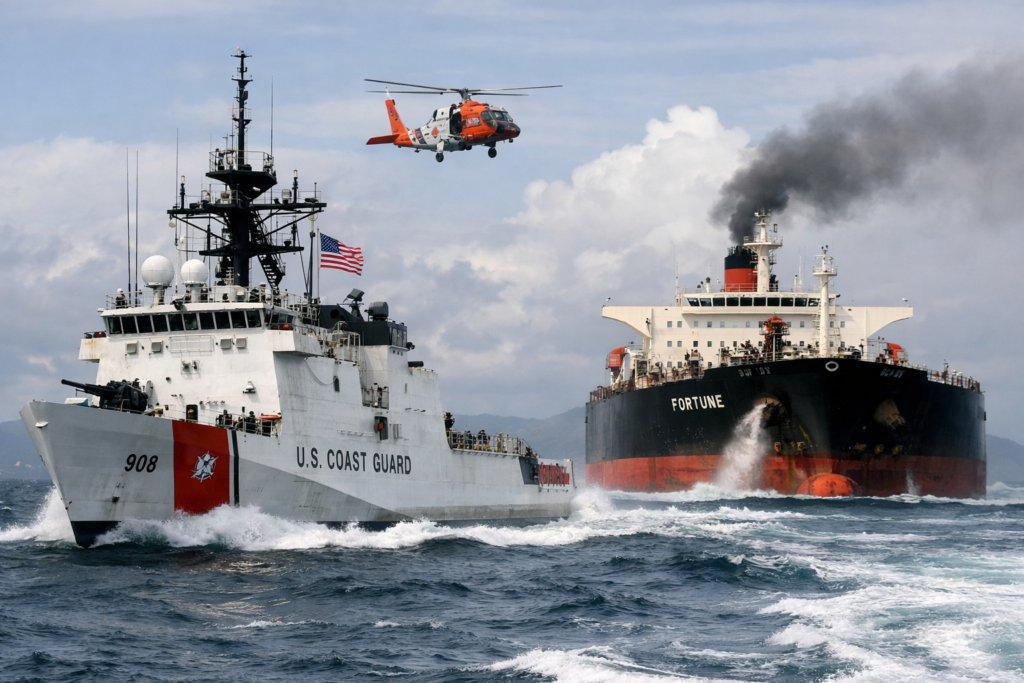
This latest pursuit — which would be the third such operation in less than a week — reflects Washington’s intensified efforts to intercept tanker traffic believed to be helping President Nicolás Maduro’s government skirt U.S. and allied sanctions. Officials say the targeted ship is part of what is often described as a “dark fleet” of vessels that obscure their identities to move oil for sanctioned nations.
Third Oil Tanker Chase Tied to Sanctions Evasion
U.S. authorities confirmed Sunday’s action follows two recent interdictions off Venezuela’s coast, including the seizure of the Panama-flagged Centuries tanker on Saturday and the Skipper earlier this month under Operation Southern Spear — a campaign aimed at cutting off revenues that fund illicit activities in the region.
The tanker currently being pursued, identified in maritime tracking sources as Bella 1 and on U.S. sanctions lists due to past ties to Iranian crude shipments, was reportedly empty and heading toward Venezuelan waters when the Coast Guard moved to intercept it.
U.S. Blockade Intensifies Pressure on Venezuelan Oil Exports
President Donald Trump last week ordered a “total and complete blockade” of all oil tankers under sanctions entering or leaving Venezuela, escalating U.S. pressure on Maduro’s government and its principal source of national revenue — crude oil production and export. Homeland Security Secretary Kristi Noem has publicly underscored that the United States will aggressively pursue any vessel suspected of carrying or supporting illicit oil transport tied to narco-terrorism and sanctions evasion.
“Illlicit movement of sanctioned oil used to fund narcoterrorism will be intercepted — we will find you, and we will stop you,” Noem said in a social media statement posted after Saturday’s interception.
International and Regional Reactions Vary
The Venezuelan government has vehemently condemned the U.S. actions, denouncing them as “acts of piracy” and a violation of international norms. Caracas has also enlisted diplomatic support from allies such as Iran, which has offered to help counter perceived aggressions — language that reflects deepening geopolitical tensions in the Caribbean and Atlantic.
Analysts warn that these repeated pursuits and interceptions could sharply reduce Venezuela’s crude exports, worsen an already fragile economy heavily reliant on oil revenues, and heighten oil price volatility on global markets. While Washington claims its maritime pressure targets only sanctioned vessels, critics — including some U.S. lawmakers — argue that the blockade may risk broader instability.
What This Means for U.S.–Venezuela Relations
As the United States maintains a growing naval and Coast Guard presence near Venezuelan waters, potential flashpoints increase. Experts suggest that continued pursuit of tankers and expanded blockade operations — particularly against vessels hiding under false flags — could strain diplomatic channels and escalate regional tensions.
This standoff underscores a broader U.S. strategy to leverage economic and military tools against nations accused of sanctions evasion, while also prompting questions about the legality and long-term impact of such maritime enforcement actions on international trade and security.