Somalia Faces Deepening Hunger Crisis as Middle East Conflict Disrupts Aid and Food Supplies
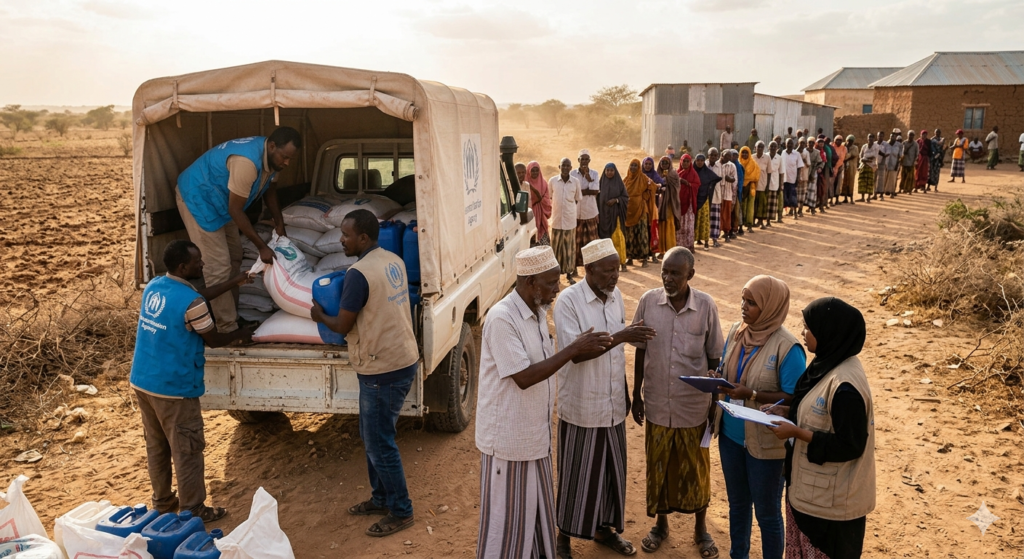
Somalia is confronting a worsening humanitarian emergency as conflict-driven instability in the Middle East begins intensifying food insecurity, economic pressure, and famine fears across one of the world’s most vulnerable regions.
Aid agencies and humanitarian experts warn that disruptions connected to escalating regional tensions are now threatening already fragile supply systems that millions of Somali families depend on for survival. Rising transportation costs, interrupted trade routes, shrinking international attention, and reduced humanitarian access are all contributing to fears that conditions could deteriorate sharply in the coming months.
The crisis comes at a devastating moment for Somalia, where years of drought, armed violence, political instability, displacement, and poverty have already pushed countless communities to the edge of survival.
Humanitarian officials say millions of people remain at risk of severe hunger, particularly children living in rural regions where food shortages and malnutrition rates continue climbing.
Searches surrounding Somalia famine crisis linked to Middle East conflict have surged globally as international organizations warn that geopolitical instability far beyond Africa is now creating life-threatening consequences inside the Horn of Africa.
Somalia’s economy and humanitarian infrastructure remain deeply sensitive to disruptions in global trade and regional security.
Much of the country relies heavily on imported food supplies and international humanitarian assistance. When conflict affects shipping routes, fuel prices, or aid funding, the impact is often felt quickly inside communities already struggling with limited resources.
Aid workers say recent instability connected to the broader Middle East situation has complicated efforts to move food, medicine, and emergency supplies efficiently into vulnerable regions.
The effects are especially dangerous for displaced families living in overcrowded camps where malnutrition and disease risks are already high.
Humanitarian agencies warn that even relatively short-term supply interruptions can become catastrophic when populations are surviving with little economic cushion or food reserves.
Conversations surrounding food shortages and hunger in Somalia continue expanding as global concern grows over the possibility of another major famine event.
Children remain among the most vulnerable victims of the worsening crisis.
Doctors and relief workers report increasing fears about rising malnutrition levels, particularly among infants and young children whose health can deteriorate rapidly without consistent access to nutritious food and medical care.
Many families are already making impossible choices between purchasing food, medicine, or clean water as economic conditions worsen.
Rural farming communities have also suffered repeated climate-related setbacks in recent years, including drought conditions that devastated crops and livestock.
For many households, the combination of environmental hardship and economic instability has erased nearly all remaining financial resilience.
Experts say Somalia’s humanitarian situation now reflects a dangerous intersection of climate stress, geopolitical instability, and chronic poverty.
Interest surrounding humanitarian disaster risks in East Africa has climbed sharply as aid groups urge wealthier nations not to overlook the crisis amid competing international emergencies.
The growing global focus on conflicts elsewhere has also raised concerns that Somalia may struggle to attract sufficient humanitarian funding.
International aid organizations often face difficult competition for resources during periods of multiple simultaneous global crises. As donor governments redirect political and financial attention toward conflicts involving larger geopolitical stakes, humanitarian operations in poorer regions can face severe funding gaps.
Relief agencies working in Somalia warn that reduced financial support could weaken emergency feeding programs, medical assistance, and clean water access for millions already living in highly fragile conditions.
The emotional toll on Somali families continues deepening as uncertainty spreads across communities already exhausted by years of hardship.
Parents describe fears about feeding children, securing medicine, and surviving future drought conditions if food prices continue rising.
Many displaced families have now lived through repeated cycles of climate disasters, armed conflict, and hunger emergencies with little opportunity for long-term recovery.
Search interest involving impact of Middle East instability on Africa has grown rapidly as analysts examine how international conflicts increasingly create ripple effects far beyond their immediate regions.
The situation also highlights how interconnected the global economy and humanitarian system have become.
Shipping disruptions, rising fuel prices, regional insecurity, and international political instability can quickly influence food availability thousands of miles away, especially in countries heavily dependent on imports and aid assistance.
Experts say poorer nations often suffer the harshest consequences from global instability despite contributing little to the underlying geopolitical conflicts themselves.
Meanwhile, humanitarian workers continue emphasizing that famine is not typically caused by a single event alone.
Instead, famine conditions emerge when multiple pressures — conflict, displacement, drought, inflation, supply disruption, and weak infrastructure — combine over time until vulnerable populations can no longer cope.
Somalia now appears increasingly exposed to exactly that kind of cumulative crisis environment.
Discussions surrounding rising food insecurity across vulnerable nations continue spreading online as economists and aid experts warn that global instability may deepen humanitarian suffering in multiple regions simultaneously.
International organizations are urging governments and donor nations to respond early before conditions deteriorate further.
Aid experts repeatedly stress that preventive humanitarian action is far less costly — both financially and in human lives — than responding after famine conditions fully emerge.
The warnings come as Somalia remains politically fragile internally as well.
Security challenges involving armed extremist groups continue complicating aid delivery in certain areas, making it difficult for humanitarian organizations to safely reach some vulnerable communities.
This combination of security risks and food instability creates especially dangerous conditions for civilians trapped between conflict and hunger.
Despite the enormous hardship, Somali communities continue demonstrating resilience through local support networks, farming adaptation efforts, and community-based relief initiatives.
Still, humanitarian workers caution that resilience alone cannot replace large-scale international assistance during periods of severe crisis.
Searches tied to global aid response to Somalia hunger emergency continue increasing as humanitarian organizations call for urgent international attention before conditions worsen further.
For many families across Somalia, however, the crisis is no longer about abstract geopolitical analysis or international diplomacy.
It is about survival.
It is about whether parents can feed children tomorrow, whether clinics will still have medicine next month, and whether vulnerable communities already weakened by years of instability can withstand yet another wave of suffering linked to forces far beyond their control.
As global conflicts continue reshaping economic and humanitarian realities worldwide, Somalia’s worsening hunger emergency stands as a painful reminder that the consequences of geopolitical instability often reach the world’s poorest and most vulnerable populations first.