U.S. Intelligence Warns Iran Preparing for Possible Ground Assault as Tensions Surge
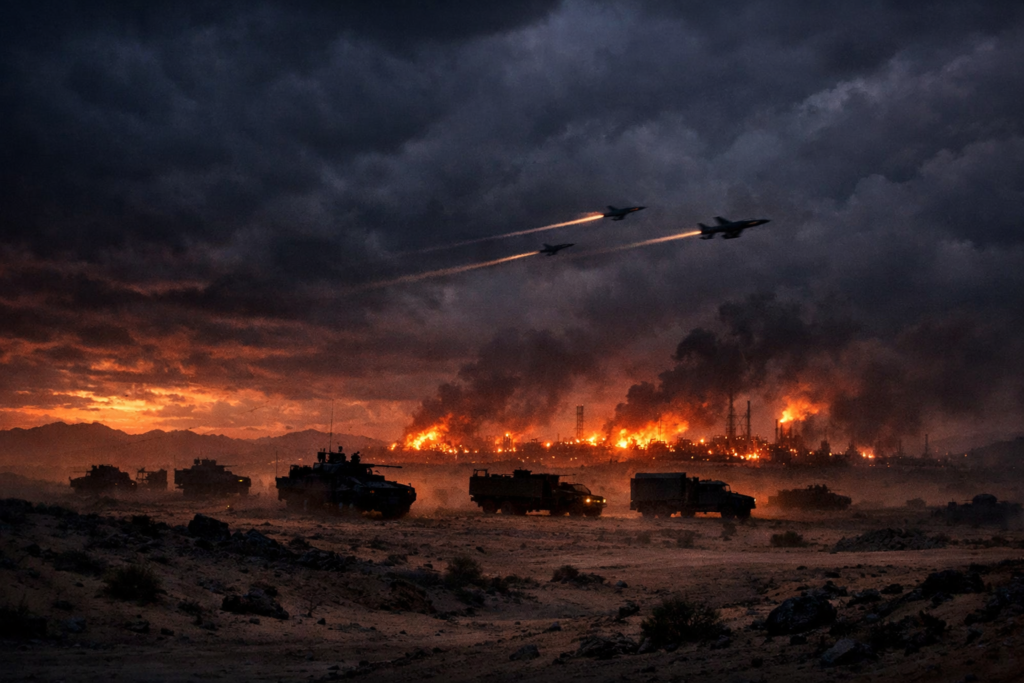
Rising tensions between the United States and Iran are entering a volatile new phase, as intelligence assessments suggest Tehran is bracing for the possibility of a direct American ground offensive. Officials familiar with the situation say Iran’s military leadership is actively preparing contingency plans, signaling a dangerous escalation in an already fragile geopolitical standoff.
According to defense analysts, U.S. Iran conflict escalation military planning has pushed both nations closer to a scenario that was once considered unlikely. While recent confrontations have largely played out through airstrikes, proxy conflicts, and economic pressure, the prospect of boots on the ground is now being taken more seriously in strategic circles.
Iranian military commanders have reportedly increased defensive readiness across key regions, including sensitive infrastructure and strategic border zones. This includes reinforcing positions, mobilizing troops, and conducting drills designed to simulate potential invasion scenarios. The goal, experts say, is not only to defend territory but also to demonstrate deterrence.
At the same time, U.S. officials have not publicly confirmed any plans for a ground operation. However, the heightened military posture in the region, combined with increased troop deployments and naval activity, has raised concerns among global observers. The situation reflects a broader pattern of Middle East war tensions global oil markets impact, where every move carries both military and economic consequences.
Energy markets are already reacting. Oil prices have shown signs of volatility amid fears that a wider conflict could disrupt critical supply routes, particularly in the Persian Gulf. Analysts warn that any escalation involving ground combat could severely impact global energy stability, further complicating an already uncertain economic landscape.
Inside Iran, the government is attempting to project strength and control. State messaging emphasizes national unity and resistance, portraying any potential conflict as a defense of sovereignty. At the same time, there are indications that internal discussions are taking place about how to respond to various levels of U.S. military engagement.
Experts note that Iran’s strategy may rely heavily on asymmetric warfare tactics. Rather than engaging in conventional large-scale battles, Iranian forces could use a combination of guerrilla operations, cyber capabilities, and regional proxies to counter any ground invasion. This approach aligns with Iran military strategy response to US invasion, which has historically focused on leveraging geography and unconventional tactics.
The broader region remains on edge. Neighboring countries are closely monitoring developments, aware that any escalation could spill across borders and destabilize the entire Middle East. Diplomatic efforts to de-escalate tensions have so far yielded limited results, with both sides maintaining firm positions.
Meanwhile, U.S. policymakers are facing mounting pressure at home and abroad. The possibility of a ground war raises serious questions about long-term strategy, potential casualties, and the overall objectives of military engagement. Critics argue that entering another prolonged conflict in the Middle East could have far-reaching consequences, both politically and economically.
Supporters of a tougher stance, however, contend that a strong military posture is necessary to counter Iran’s influence in the region. They point to ongoing security concerns, including threats to allies and disruptions to international shipping routes, as justification for maintaining pressure.
This evolving situation highlights US military ground invasion Iran readiness concerns, as military planners weigh the risks and benefits of different approaches. The uncertainty surrounding potential next steps adds to the complexity of an already tense standoff.
On the global stage, world leaders are calling for restraint. International organizations and allied nations are urging both Washington and Tehran to pursue diplomatic solutions before the situation spirals further out of control. The stakes are high, not only for the countries directly involved but for the stability of the international system as a whole.
For civilians in the region, the growing tension brings a sense of unease. Memories of past conflicts remain fresh, and the possibility of another large-scale war raises fears about displacement, economic hardship, and loss of life. Humanitarian groups are beginning to assess potential risks and prepare for worst-case scenarios.
As the situation continues to develop, one thing is clear: the margin for error is shrinking. Miscalculations or unintended incidents could quickly escalate into a broader conflict. Both sides appear to be preparing for multiple outcomes, even as they publicly maintain their respective positions.
Ultimately, the path forward remains uncertain. Whether through diplomacy or confrontation, the decisions made in the coming days and weeks will likely shape the future of U.S.-Iran relations and the stability of the Middle East for years to come.