FBI Searches Pennsylvania Storage Unit in Expanding Probe Tied to New York City’s Gracie Mansion
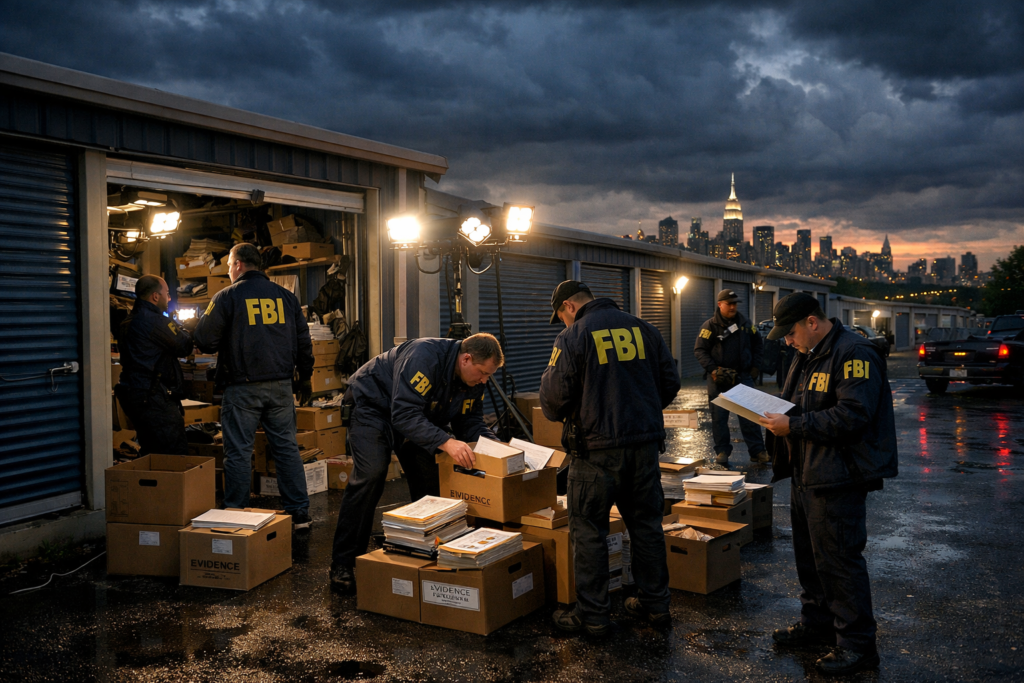
NEW YORK — Federal investigators have intensified a growing corruption investigation tied to New York City’s political circles after conducting a search at a storage facility in Pennsylvania that authorities believe may contain evidence connected to Gracie Mansion, the official residence of New York City’s mayor.
According to officials familiar with the investigation, agents from the Federal Bureau of Investigation recently executed a search warrant at a storage unit located in Pennsylvania as part of a broader probe examining potential misconduct linked to individuals connected to City Hall.
The search marks a significant expansion of a federal investigation that has already drawn attention across New York’s political landscape.
While investigators have not publicly detailed exactly what they were looking for, sources say the storage unit may contain documents, digital files, or other materials that could shed light on activities tied to Gracie Mansion — the historic residence that serves as the official home of the mayor of New York City.
Gracie Mansion, overlooking the East River on Manhattan’s Upper East Side, has long been associated with city leadership and political events. Because of its symbolic and practical role in municipal government, any federal investigation referencing the property quickly draws intense public attention.
The search of the Pennsylvania storage facility appears to be part of a wider federal corruption inquiry examining whether political figures or associates may have improperly handled records, financial transactions, or communications tied to city operations.
Authorities have remained tight-lipped about the specifics of the investigation.
Officials with the FBI confirmed that agents carried out a court-authorized search but declined to provide further details, citing the ongoing nature of the probe. Federal investigations of this type typically involve months — and sometimes years — of behind-the-scenes work before prosecutors determine whether criminal charges are warranted.
Still, the involvement of federal agents suggests investigators believe the materials stored at the facility could be significant.
Law enforcement experts say storage units are often searched during federal corruption investigations because they may contain items individuals attempt to keep out of public view — including old documents, electronic devices, or personal records tied to financial activity.
In some cases, investigators also seek archived materials that may help reconstruct a timeline of events or reveal communications between individuals involved in a potential scheme.
The fact that the storage unit was located in Pennsylvania adds another layer to the story.
Investigators sometimes expand searches beyond the state where a political officeholder works when they suspect evidence may have been relocated or stored elsewhere. Storage facilities in neighboring states can offer privacy and distance from local scrutiny, making them attractive places to keep sensitive materials.
As news of the search spread, political observers across New York began speculating about how the investigation could impact City Hall.
Corruption investigations involving municipal leadership can carry major political consequences, particularly in a city as large and influential as New York. Allegations tied to misuse of public office or financial wrongdoing often trigger intense scrutiny from voters, watchdog groups, and state officials.
Although investigators have not publicly accused any specific official of wrongdoing, the mention of Gracie Mansion in connection with a federal search has heightened attention around the case.
Legal experts say it’s important to remember that a search warrant does not necessarily indicate that a crime has been committed. Instead, it means investigators convinced a judge there was probable cause to believe evidence relevant to an investigation might be found at a particular location.
Still, such searches are rarely conducted lightly.
To obtain a federal search warrant, prosecutors must present detailed evidence to a judge demonstrating why investigators believe certain materials may exist and how they relate to a potential violation of federal law.
In this case, the judge authorized agents to examine the Pennsylvania storage unit for items that could potentially provide insight into activities involving individuals connected to Gracie Mansion or the broader New York City political network.
Political analysts say the investigation underscores the intense scrutiny public officials face in the modern era.
With digital communication, financial records, and travel data all leaving extensive trails, investigators today often piece together complex cases by analyzing multiple sources of evidence — sometimes stretching across different states or even countries.
That investigative approach may explain why federal agents extended their search outside New York.
For residents of New York City, the unfolding investigation raises questions about transparency and accountability in local government.
Public trust in city leadership is a central issue in municipal politics, and even the suggestion of a federal corruption investigation can have ripple effects across the political system.
City officials have not issued detailed public comments about the Pennsylvania search. In situations like this, government offices often decline to respond while investigations remain active.
For now, the focus remains on what federal agents may have discovered inside the storage unit.
Investigators will likely spend weeks reviewing any materials recovered during the search, analyzing documents and digital data that could potentially clarify whether laws were broken.
Depending on what they find, the case could evolve in several ways — from quietly closing if no wrongdoing is discovered to expanding into a larger investigation involving subpoenas, interviews, or even indictments.
At the moment, federal authorities appear to be proceeding cautiously.
But the search itself signals that investigators believe important evidence could exist beyond the walls of City Hall — and perhaps far from the historic residence overlooking the East River.
As the investigation continues, both political leaders and the public will be watching closely to see what emerges from this unexpected connection between a Pennsylvania storage unit and one of New York City’s most recognizable government landmarks.