Russia Blocks WhatsApp and Tightens Grip on Messaging Apps — What It Means for Free Speech and Everyday Life
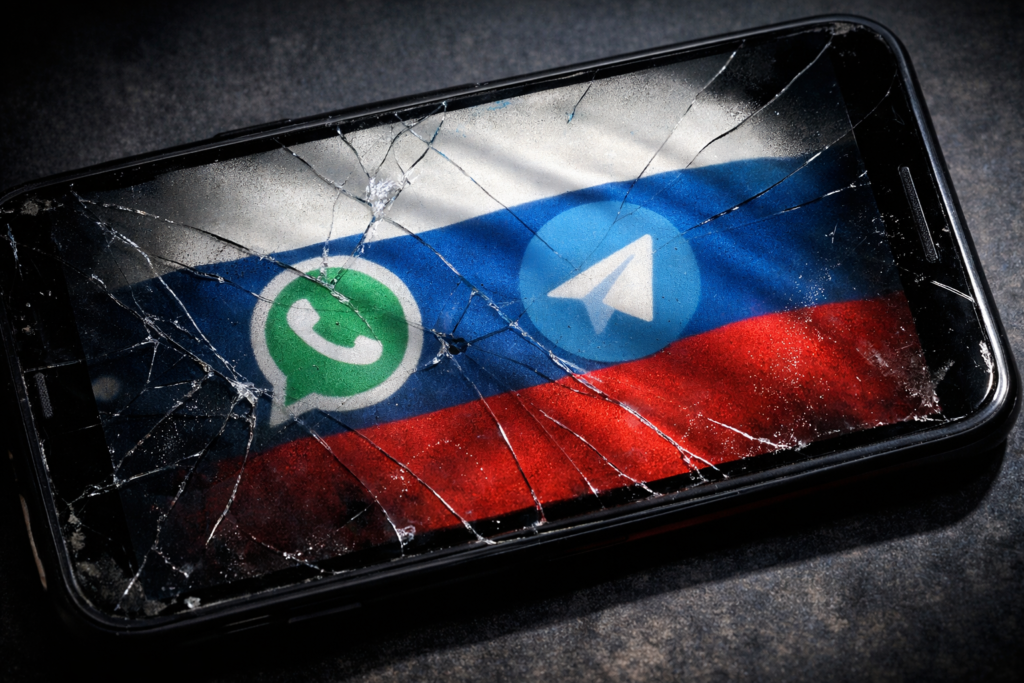
In a move that has alarmed millions of people inside and outside its borders, the Russian government has taken a dramatic step in restricting digital communication by fully blocking the popular messaging app WhatsApp, marking a deepening effort to control the flow of information online. The decision, which affects well over 100 million everyday users, is part of a broader campaign by authorities in Moscow to limit access to foreign technology and steer Russians toward homegrown alternatives — a shift that many critics say goes far beyond tech policy and strikes at the heart of personal privacy and free expression.
This latest development is not only a breaking technology story — it’s a human one. It affects families separated by distance, people trying to stay connected with loved ones, and countless Russians who relied on secure messaging to organize, communicate, or simply feel close to friends in a world increasingly shaped by digital connection.
A Block That Changes Everyday Life
On Feb. 11, 2026, Russian authorities took the extraordinary step of removing WhatsApp from the country’s official internet directory, effectively cutting off normal access to the widely used messaging platform. The move comes after months of escalating restrictions that had already throttled calls and other features on both WhatsApp and another popular app, Telegram — long favorites among Russians for encrypted messaging and group communication.
Roskomnadzor — Russia’s powerful internet regulator — confirmed the blockade, saying Meta’s WhatsApp failed to comply with local laws and regulations. Kremlin spokespeople urged citizens to adopt a domestic messaging app called Max, which the government calls a “national messenger” and which is being actively promoted as a secure alternative.
For everyday Russians, especially young people and working families who relied on WhatsApp to chat, share photos, and make voice and video calls, the abrupt change has been jolting — and, in many cases, isolating. Long before the full block, Russians were already feeling the effects of restricted calls and degraded performance on messaging apps, making everyday communication more difficult.
What’s Behind Moscow’s Decision?
Russian officials argue that foreign-owned platforms like WhatsApp and Telegram have become tools for fraud, extortion, and even criminal activity — claims that have been used repeatedly in the past to justify internet restrictions. Authorities say that because these apps are headquartered outside Russia and do not fully cooperate with local data or compliance laws, they pose “security risks” and therefore must be limited or replaced with services that Russian regulators can oversee.
But critics — including the companies themselves — see the move differently.
A spokesperson for WhatsApp, which is owned by Meta Platforms, released a statement condemning the blockade as an attempt to isolate more than 100 million people from secure and private communication and to funnel them toward an app that lacks end-to-end encryption. They warn this step jeopardizes not just digital privacy but personal safety for people who depend on secure messaging for work, education, and relationships.
Telegram’s founder, Pavel Durov, has also criticized the restrictions. He called the government’s actions an “attack on freedom of speech” and pushed back against the idea that encouraging citizens to leave encrypted platforms improves national security. Telegram has long been a go-to app for grassroots organizing, independent news sharing, and private discussion — and even Russian soldiers and their families have used it to communicate.
A Digital Shift With Real Costs
To understand the full impact of Russia’s actions, it helps to look at how important these apps have been to daily life.
Before the ban:
- WhatsApp had tens of millions of active users in Russia.
- Telegram was nearly as widely used — especially for channels sharing news, weather updates, and official alerts.
- Many businesses, nonprofits, and everyday people relied on these apps for identity verification, transactions, and group coordination.
Removing easy access to these platforms — even with VPNs or other workarounds — has real consequences. Families who live across regions or borderlines suddenly find their usual lifelines weakened. Students and teachers using apps for remote learning face new barriers. Workers and entrepreneurs lose tools they depend on to stay organized and connected in an increasingly digital world.
And because the government-backed Max app lacks strong encryption, privacy advocates fear the new communication landscape in Russia will be one where messages could be monitored or stored by authorities — raising larger questions about digital surveillance and civil liberties.
Broader Trends: Digital Sovereignty and Isolation
Russia’s digital strategy mirrors a broader trend among authoritarian governments seeking to assert “digital sovereignty.” By controlling the technologies and platforms citizens use, these states aim to shape public discourse, limit foreign influence, and build internet ecosystems that operate under local laws and oversight.
But in doing so, they often create what critics call a “digital iron curtain” — reminiscent of barriers of the Cold War era, where cross-border information flows were tightly restricted. Experts warn that such internet fragmentation doesn’t just affect a nation’s internal communications; it undermines the global, interconnected nature of the web that so many people — especially younger generations — take for granted.
For millions of Russians watching these developments unfold, there’s an emotional toll. Some have already turned to virtual private networks (VPNs) to access blocked apps, while others have expressed frustration and fear that their digital world is shrinking. Many don’t want to lose the ability to speak freely, share moments with loved ones, and access news and perspectives from outside their country.
What This Means to the Rest of the World
While this is a Russian domestic policy move, the implications reverberate globally.
For the United States and its allies, the move underscores how communication technology has become a geopolitical arena. Western tech companies find themselves caught between compliance with local laws and protecting the privacy of users. And as governments around the world debate how to regulate big tech, the Russia case becomes a stark example of how those debates can tilt toward suppression rather than openness.
Moreover, in the context of the ongoing war in Ukraine, this digital tightening adds another layer to the ways the conflict affects not only battlefields but information landscapes, free expression, and the everyday lives of millions.