Outcry in New York City: Council Questions Cold Weather Response After Deadly Winter Snap
NEW YORK CITY — The winter chill that swept through New York earlier this year brought more than frozen streets and sore muscles — it brought a deep sense of loss, frustration, and questions about whether city leaders did enough to protect those most vulnerable.
On Tuesday, the New York City Council held a series of tense hearings that put Mayor Zohran Mamdani’s administration squarely in the spotlight. At issue: whether the city’s response to one of its most extreme cold snaps in decades was sufficient — and whether more should have been done to prevent dozens of heartbreaking deaths among people exposed to the brutal winter weather.
A Deadly Cold Snap and Rising Scrutiny
New York City endured a prolonged period of sub-freezing temperatures and fierce winds this winter, with dangerously low wind chills and cold darker than usual. Many New Yorkers felt the chill in their bones — quite literally. In the midst of this extended cold wave, at least 17 people were found dead outdoors, with hypothermia cited as a primary factor in many of those tragedies.
City officials had declared a Code Blue alert — a protocol that keeps all shelters and safe havens open around the clock when temperatures dip below freezing — but, critics say, the reality of life on the streets didn’t reflect that promise for everyone in need.
Council Members Demand Answers
That frustration played out clearly at the council hearings. Lawmakers from both the Public Safety and General Welfare Committees pressed members of the Mamdani administration over how the city helped unsheltered New Yorkers during the cold snap — particularly whether enough was done to get people indoors and whether policies designed to protect civil liberties might have cost lives.
Some council members pointed to state rules that limit when city workers can involuntarily remove someone from the street. Under those rules, individuals must show signs of severe mental illness or be a danger to themselves or others before they can be taken to a shelter against their will.
Council Speaker Julie Menin asked a pointed question that echoed through the hearing room:
“How can a person refusing to come indoors in freezing weather — where they are clearly at risk of dying — not be assessed as a danger to themselves?”
It’s a question that digs deep into the tension between individual rights and public safety, especially in a city that prides itself on civil liberties.
City Officials Defend Their Response
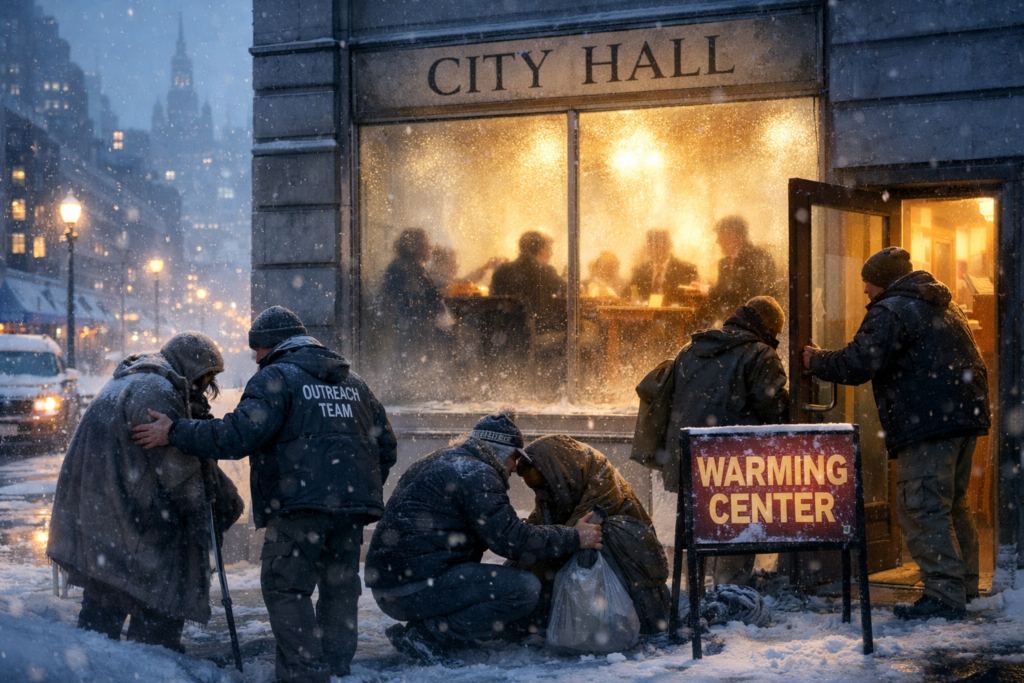
City leaders defended their actions, emphasizing the scale of the unprecedented cold weather and the steps already taken. Emergency management officials said the city deployed dozens of warming vans and centers, activated hundreds of outreach workers, and placed thousands of people in shelters and other safe spaces.
But the policy on involuntary removal remains unchanged — and that’s where much of the debate lies. Officials argue that forcing someone into a shelter when they’re not a danger, mentally or physically, would violate state law and could create new harms.
Mayor Mamdani, while not supporting a lowering of that legal threshold, pointed to the scale of the cold and the fact that temperatures dipped to some of the lowest levels in recent memory — conditions some meteorologists compared to those in Antarctica.
Heartbreaking Stories Behind the Numbers
What makes this debate so raw are the individual lives behind the statistics. For many New Yorkers, each death represents a neighbor, friend, or someone they might have passed on a sidewalk during the coldest days.
Advocates and family members who shared testimony or spoke publicly said that lack of shelter access, fear of institutional spaces, and past trauma keep many homeless individuals from seeking help — even in life-threatening conditions. External outreach workers echoed that humane, patient engagement is essential, as many vulnerable people avoid shelters out of fear, mistrust, or previous bad experiences.
The knowledge that at least 13 of the deaths were linked to hypothermia underscores the urgency of finding effective solutions. This was one of the sharpest winter cold snaps the city has seen in decades, and the toll on human life has shaken the community.
Public Voices and Emotional Appeal
As hearings continued, voices from outside City Hall weighed in. New York City Public Advocate Jumaane D. Williams urged council members to consider long-term planning for future weather emergencies, emphasizing that this crisis exposed deeper vulnerabilities.
Williams called on lawmakers not just to debate policy failures, but to work toward systemic changes — expanding supportive housing, bolstering services for New Yorkers in need, and building resilience for a city facing increasingly unpredictable climate conditions.
This moment is not simply about a policy wonk’s disagreement — it’s a deeply emotional conversation about whether a great American city did enough to protect its most vulnerable residents during a literal fight for survival.
A Broader Look at New York’s Cold Weather Reality
The extreme cold wasn’t limited to a few nights of discomfort. Temperatures plunged into life-threatening territory, with wind chills that made even short outdoor exposure dangerous. Meteorologists flagged the weather as one of the most severe cold snaps in years — leaving sidewalks slick, transit services challenged, and outdoor survival a real threat for those without warmth or shelter.
In many ways, the weather highlighted both the strengths and limitations of city services. While some outreach efforts succeeded in bringing people indoors and saving lives, others fell short or arrived too late for those who refused shelter — either out of fear or simple mistrust.
What Comes Next
The council’s hearings are just the beginning of what could be a broader investigation into how cities prepare for extreme weather, especially as climate change increases the frequency of such events.
Lawmakers and advocates are pushing for:
- review of state laws limiting shelter outreach
- expanded supportive housing options
- greater coordination between outreach teams and emergency services
- improved planning for future extreme weather events
For many New Yorkers, especially those in neighborhoods where outreach efforts struggled to connect with those outdoors, this moment has become a rallying cry: no life should be lost to cold weather simply because the system couldn’t reach them in time.