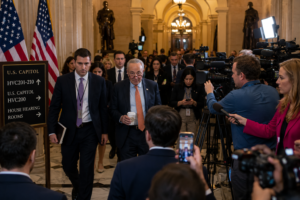
Trump Administration Faces Congressional Pressure Over DHS, ICE, Immigration, and Epstein File Release

Washington, D.C. — Washington’s political heartbeat has been pounding harder this week as President Donald Trump’s administration confronts rising tension on multiple fronts — from immigration enforcement battles with Congress to the controversial release of Jeffrey Epstein files by the U.S. Department of Justice. In the midst of a looming DHS funding deadline, debate over ICE enforcement tactics, and fierce calls for transparency on Epstein-era documents, emotions across the country are running raw and accountability hangs in the balance.
This isn’t just another political story — it’s a moment where the lives of everyday Americans, immigrant families, survivors of abuse, and national institutions collide.
DHS and ICE Funding Fight Nears Deadline
Congress and the Trump administration are locked in a high-stakes struggle over funding for the Department of Homeland Security (DHS), which oversees Immigration and Customs Enforcement (ICE). With a partial government shutdown looming and a deal still unresolved, lawmakers are publicly clashing over how immigration enforcement should be run and who should foot the bill.
Democratic leaders have laid out clear demands: they want more oversight of ICE practices, greater transparency and accountability in how arrests and deportations are carried out, and protections for vulnerable communities. Some lawmakers have gone so far as to say the current approach to immigration — with heavy ICE enforcement in cities like Minneapolis — is “not a system Americans want to fund,” stressing the emotional and community toll of aggressive operations.
Republican legislators, including key allies of the president, argue that a strong DHS budget is essential to national security and border control. They maintain that resources are critical for agents on the ground working to uphold immigration laws. But for many Americans — especially families shaken by recent shootings and controversial detentions — the debate feels deeply personal and painfully urgent.
Immigration Enforcement: What’s at the Heart of the Clash
One major flashpoint in this fight has been the Trump administration’s immigration enforcement operations in places like Minnesota. Under a program known as Operation Metro Surge, thousands of federal agents were deployed with the stated aim of targeting undocumented immigrants. That initiative sparked widespread protests, legal challenges, and national debate over the balance between law enforcement and civil liberties.
After public outcry over raid tactics and even fatal shootings linked to ICE operations, the administration recently announced a partial drawdown of 700 agents in the region, though more than 2,000 remain. Critics — including local leaders and civil rights advocates — say these actions fracture trust in law enforcement and undermine the social fabric of communities where neighbors worry every day about who might be next.
Supporters of continued enforcement argue that removing ICE personnel would erode border security and embolden illegal immigration. But for the immigrant families living in fear of sudden raids, the news has ignited a deeper sense of vulnerability and heartbreak that transcends political labels.
Epstein Files: Transparency or Troubling Gaps?
In another corner of the political arena, the Department of Justice has drawn fierce scrutiny over the release of documents tied to convicted sex offender Jeffrey Epstein. Under the rules of the Epstein Files Transparency Act — a bipartisan law passed by Congress — over 3 million pages of documents were made public with the intent of shedding light on Epstein’s network and accountability for powerful figures implicated in wrongdoing.
Justice officials, including Deputy Attorney General Todd Blanche, have defended the release process and insisted that the department complied with the law and did not shield any individual, including President Trump, from scrutiny. Blanche also acknowledged that not all files are ready for public view and that additional documents remain under review.
But lawmakers have increasingly pressed the DOJ to allow unredacted access to the documents, saying citizens deserve to see the full record without withholding critical information that could bring long-awaited closure to survivors of Epstein’s crimes. On Capitol Hill, House members were recently granted permission to review unredacted files with strict security measures in place.
Survivors of abuse and legal advocates have said that redactions of personal data must be handled carefully — not just to abide by legal standards, but to protect victims’ dignity and privacy. The emotional weight of seeing traumatic experiences laid bare, even within court files, has reverberated among communities across the country asking for justice and recognition long overdue.
Politics, Pain, and Public Trust
These issues — immigration enforcement, DHS funding, and the Epstein files — are not isolated. They speak to a broader national conversation about trust in government, fairness under law, and the emotional toll of leadership choices on real families and individuals.
The DHS funding standoff has ignited fears of another partial government shutdown, raising uncertainties about federal services from airport security to disaster response readiness. ICE enforcement has become a symbol of deeper cultural divides over immigration policy and national identity, while the Epstein files have forced open wounds and raised unresolved questions about accountability at the highest levels.
At the heart of the debate are Americans who wake up every day wondering what these political battles mean for jobs, safety, family unity, and human rights. Voices from both sides of the aisle echo in town halls and dinner tables — each claiming moral high ground but leaving the public asking whether compromise and empathy can find a place in the negotiation room.
What Comes Next
As lawmakers continue to negotiate, Americans will be watching closely. With a looming DHS funding deadline, national debates over immigration enforcement, and pressing calls for greater transparency on the Epstein files, the coming weeks may shape the political landscape well into the next election cycle.
This moment, marked by competing demands and raw emotions, challenges the country to balance enforcement with compassion, security with rights, and national priorities with individual dignity — questions that every American, whether in Washington or the Heartland, will feel in their own way.