Russia Detains Suspect in Shooting of Senior General — Blames Ukraine; What This Means for Global Conflict and Peace Talks
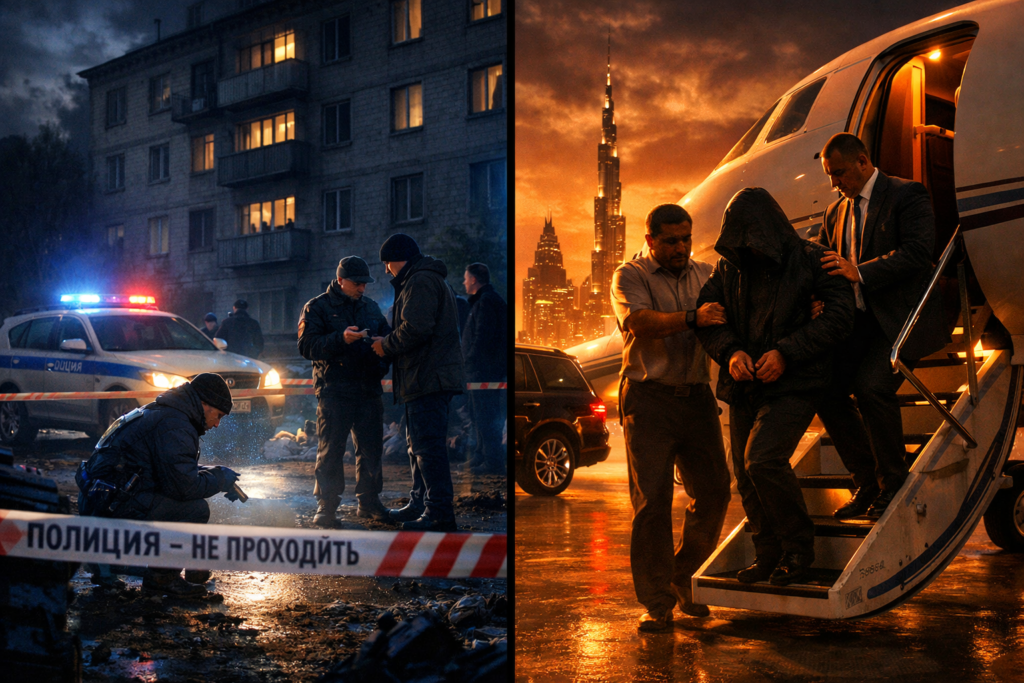
In a dramatic turn that has resonated from Moscow to Washington, Russian authorities say they have detained a suspect in the shooting of a senior military intelligence general, accusing Ukraine of orchestrating the attack. The incident, which left the general wounded and hospitalized, has added new tension to an already fragile moment in the years-long conflict between Moscow and Kyiv — a war that continues to shape international relations and global security debates.
According to Russia’s Federal Security Service (FSB), a man identified as Lyubomir Korba was detained in Dubai, United Arab Emirates, and extradited to Russia to face charges in connection with the Feb. 6 attack. Russian officials claim Korba acted on behalf of Ukraine’s intelligence service. Kyiv, however, firmly denies involvement and says it had nothing to do with the shooting, suggesting that internal disagreements or conflicting motives could be at play instead.
But beyond the politics and official statements, this high-profile shooting has stirred fear, confusion and deep questions about what comes next for a region already scarred by loss and uncertainty.
A Violent Morning in Moscow
On the morning of Feb. 6, Lieutenant General Vladimir Alekseyev, the deputy head of Russia’s military intelligence agency (known as the GRU), was shot multiple times in the stairwell of his apartment building in northwest Moscow. Emergency responders rushed him to a hospital where he underwent surgery and remains under care.
For many Russians and outside observers alike, a senior general being targeted on his home turf — moments before peace negotiations concluded in Abu Dhabi — was shocking and alarming. It brought back memories of earlier violent episodes where high-ranking officials were killed or wounded under mysterious or contested circumstances.
Local residents living near Alekseyev’s apartment reported a flurry of police vehicles and security agents swarming the quiet neighborhood, turning a seemingly ordinary morning into a scene of chaos and conjecture.
Tensions, Blame and Denials
From the Kremlin’s perspective, the incident was no random act of violence. Officials — including Russian Foreign Minister Sergey Lavrov — labeled the shooting a “terrorist act” aimed at derailing peace talks between Russian, Ukrainian and U.S. officials held in Abu Dhabi just a day earlier.
The Russian government says that following the attack, investigators tracked the suspect to Dubai, where Korba was detained with the cooperation of authorities in the UAE and then handed over to Russian custody. Officials also reported that two accomplices were identified — one arrested in Moscow and another who allegedly fled toward Ukrainian territory.
In stark contrast, Ukrainian officials have denied any role in the shooting. A spokesperson for Ukraine’s Foreign Ministry said Kyiv “had nothing to do with that particular attack,” even raising the possibility that the violence stemmed from internal Russian conflicts or misguided intelligence reports.
This public back-and-forth highlights not just a clash of narratives, but the deep emotional pain and political fog surrounding wars that spill beyond battlefields into cities, homes, and diplomatic rooms.
The Human Cost
Behind the geopolitical arguments lies the human face of modern conflict.
Lieutenant General Alekseyev, 64, is more than a military title. To his family, friends and colleagues he is a father figure, a leader shaped by decades of service in Russia’s armed forces. His shooting sent shock waves through his inner circle, bringing home the vulnerability even powerful figures can face in uncertain times.
For many Russians, this latest incident compounded a wearying sense of insecurity — a reminder that even those in positions of power are not immune to sudden violence.
Across Europe and the United States, analysts watched with concern, fearful that such episodes could jeopardize efforts toward truce or stop-the-bleeding diplomacy.
A Pattern of Violence
This is not the first time a senior Russian officer has been targeted in recent years. Since Russia launched its full-scale invasion of Ukraine in 2022, there have been a string of attacks on high-ranking officials that Moscow has publicly connected — rightly or not — to Ukraine.
In the past year alone:
- A lieutenant general was fatally wounded in a bomb attack in Moscow.
- Another senior officer was killed in an explosive blast outside his home.
- Several other incidents have left Russian officials dead or wounded under opaque circumstances.
These events have stirred fears of an escalating pattern of violence that goes beyond conventional battlefield engagements.
What It Means for the U.S. and Its Allies
In Washington, policymakers have voiced concern that targeted attacks on military officials could make an already volatile situation more unpredictable. For U.S. leaders invested in diplomacy and peace negotiations, such incidents threaten to widen the divide and make constructive engagement harder.
Some U.S. defense analysts argue that regardless of who ordered the attack, the uncertainty itself is destabilizing. It feeds narratives that fuel mistrust on both sides of the conflict and risk dragging other nations deeper into proxy disputes.
For everyday Americans watching from afar, this issue may feel distant. But the ripple effects of such violence — from energy markets to international peace efforts — can touch millions of lives far beyond Ukraine and Russia.
A Fragile Moment in Time
At its core, the shooting of a senior general in Moscow and the arrest of a suspect in Dubai tells us something deeper about global conflict today:
- Wars leave emotional scars that go well beyond battlefields.
- Diplomacy can be disrupted as easily by a bullet as by policy disagreements.
- Human lives — whether leaders or civilians — are caught in the crossfire of politics and power.
As investigations continue and global leaders sift through accusations and denials, one truth remains clear: real people are at the heart of this story, with emotions, families and futures hanging in the balance.
For now, the world watches, waits, and hopes for clarity, peace and an end to violence that has already cost far too much.