Don Lemon Arrested After Covering Minnesota Anti-ICE Church Protest — A Landmark First Amendment Clash
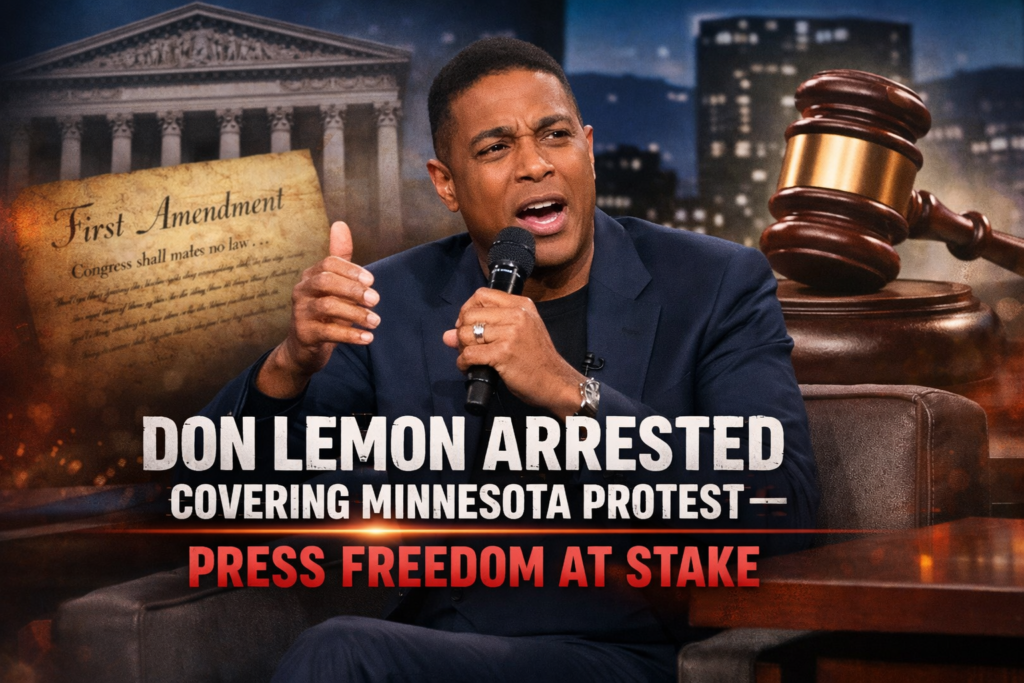
LOS ANGELES / ST. PAUL, Minnesota — Former CNN anchor and independent journalist Don Lemon is at the center of a heated nationwide debate after his federal arrest in connection with his coverage of an anti-ICE protest at Cities Church in St. Paul, Minnesota — an event that disrupted a church service and has since ignited strong reactions over press freedom, First Amendment rights and federal enforcement tactics.
Lemon, 59, was taken into custody in Los Angeles on January 30, 2026, by federal agents more than a week after the protest on January 18, in which demonstrators entered the church chanting against U.S. Immigration and Customs Enforcement (ICE) amid ongoing tensions over immigration enforcement and controversial agent actions in Minnesota.
The arrest has drawn widespread attention, not only because of Lemon’s high public profile but also because it raises complex questions about how journalism and protest intersect — and the extent to which reporters can be held liable for coverage of politically charged events.
What Happened at the Protest in St. Paul?
The controversy began with a protest at Cities Church in St. Paul, where activists disrupted a worship service by entering the sanctuary and chanting anti-ICE slogans. The demonstration was aimed at drawing attention to federal immigration policy and a pastor’s reported association with ICE leadership in Minnesota — a charge that church officials dispute.
Lemon was in Minnesota, covering the protest for his independent news platform, livestreaming segments of the event and interviewing participants and congregants. He maintained throughout that he was there in a journalistic capacity, not as an active participant in the protest.
Footage from the protest shows Lemon narrating and interviewing individuals inside and outside the church, documenting the scene as demonstrators chanted and churchgoers reacted. During the church service, some worshippers expressed discomfort and were asked to leave by church leadership.
Arrest, Charges and Legal Backdrop
Federal prosecutors obtained a grand jury indictment in Minnesota that included Lemon among nine defendants alleged to have violated civil rights statutes and federal laws intended to protect religious freedom and the exercise of worship. Authorities cited two main federal laws:
- Conspiracy against rights under an 1871 civil rights statute, historically used to protect civil rights against conspiratorial violations.
- The Freedom of Access to Clinic Entrances (FACE) Act, which also protects access to places of worship from interference.
Charges carry potentially serious penalties. Prosecutors argue that the actions at the church and the alleged coordination of individuals — including Lemon — could have impeded congregants’ constitutional rights to worship without intimidation.
Lemon was arrested in Los Angeles while covering the Grammy Awards and held for about 12 hours before being released without bail on January 30. A federal judge set conditions requiring him to avoid contact with witnesses and to seek approval for international travel ahead of his next court appearance, slated for February 9 in Minneapolis.
Lemon’s Account and Defense
Lemon has publicly challenged the legal basis for his arrest and indictment. In his first major interview after his release on “Jimmy Kimmel Live!” on February 3, he reiterated that he was not a protester, but a journalist — insisting his presence was to “chronicle, document and record” the events unfolding in the church.
He recounted how federal agents confronted him in his Los Angeles hotel without prior notice, even as his attorney had offered to coordinate a voluntary surrender — a move he says was ignored. Lemon described being “jostled” and handcuffed without seeing a warrant upfront, only being shown one later via a phone.
Lemon, a veteran journalist who was fired from CNN in 2023 after a controversial tenure, has vowed to fight the charges aggressively and has said, “I will not be silenced,” framing his arrest as a potential attack on independent journalism and press freedom.
Broader Legal and Political Implications
Press freedom advocates, civil liberties groups and some members of Congress have expressed concern over the charges against Lemon and other journalists. They have questioned whether covering a protest should subject reporters to federal prosecution, noting that the First Amendment generally protects the role of journalists in documenting and reporting contentious public events.
Lemon’s arrest arrives amid broader national tensions over immigration policy enforcement, particularly after fatal shootings by federal agents in Minnesota that fueled the anti-ICE protests. The church protest became a focal point of anger and public outcry, with some activists calling attention to alleged ICE abuses.
Legal experts note that charging a reporter with crimes tied to coverage is rare and legally complex, especially given that a magistrate judge initially declined to authorize a criminal complaint against Lemon and others involved in the protest on evidentiary grounds. Prosecutors then took the unusual step of pursuing a grand jury indictment.
Critics argue that targeting journalists could have a chilling effect on independent media, undermining the ability of reporters to cover protests and government policies without fear of prosecution. Support for Lemon has also come from elected officials and major media figures who label the arrest as emblematic of a broader struggle over press rights.
Reactions from Advocates, Officials and Media Community
In the wake of Lemon’s arrest and subsequent release, reactions have been sharply divided:
- Civil liberties advocates warn that using civil rights and FACE Act provisions to prosecute journalists sets a troubling precedent.
- Media professionals argue that journalistic presence at protests is protected activity and essential for transparency.
- Supporters of the justice actions, including Attorney General Pam Bondi, defend the prosecution as necessary to protect religious freedom and uphold the law, emphasizing that disruptions at worship services warrant enforcement.
Some public figures have also linked the case to larger debates about federal priorities and political motives, especially given Lemon’s vocal criticism of immigration policy and his status as an independent media figure.
What Comes Next
As the legal battle unfolds, Lemon’s next court date in Minneapolis federal court on February 9 will be closely watched by legal observers, press freedom groups, and journalists nationwide.
The outcome could have implications beyond Lemon himself — shaping future interpretations of how journalists are treated when covering protests that intersect with laws protecting religious freedom, public safety, and civil rights.
The case underscores a growing tension in American public life: the balance between reporting on civil unrest, defending constitutional liberties, and enforcing federal laws in politically charged contexts.